Representation refers to the re-presentation of certain aspects of reality such as gender, race, age, location, disability etc. Media texts are representations of reality as they are written, composed, framed, cropped, branded, targeted and edited by producers. Arguably, they are artificial versions of reality. For example, the character Benigni is represented as weak and lonely which is signified through the long shot as it reveals the empty room. The shot also portrays him as dull as the brown wallpaper/carpet connote unexciting colours. Therefore, the short film is representing old people as lonely and uninteresting.

An ideology is a set of ideas or beliefs that represent a person's actions, emotions, personality, goals or expectations etc. In the media, its the ideas behind a text which is basically the purpose made by its producers. For example, some dominant ideologies in society such as football is seen with a hegemonic (dominant) status in the UK. This is because newspapers are dominated in the sports section so everyone is expected to understand and accept its national importance.
Audience
An audience is people who watch or listen to a television, radio program, a play, movie, concert, etc. They are the consumer of a product. Target audience is when certain people are targeted for a certain product, for example: a barbie doll advert will include pink colours to target girls. In the media, The Hypodermic Needle Model, explains how passive audience's recieve information without challenging what it is. It suggests that in society, "information from a media text passes into the mass consciouness of the audience unmediated, ie the experience, intelligence and opinion of an individual are not relevant to the reception of the text." (http://www.mediaknowall.com) Therefore, it means that as an audience, we are manipulated by the media. Furthermore, our beliefs, ideologies and personality are all controlled by the media as this is a passive audience. Active audience's are people that challenge or question what information they are receiving. They are not controlled by the media.
An audience is people who watch or listen to a television, radio program, a play, movie, concert, etc. They are the consumer of a product. Target audience is when certain people are targeted for a certain product, for example: a barbie doll advert will include pink colours to target girls. In the media, The Hypodermic Needle Model, explains how passive audience's recieve information without challenging what it is. It suggests that in society, "information from a media text passes into the mass consciouness of the audience unmediated, ie the experience, intelligence and opinion of an individual are not relevant to the reception of the text." (http://www.mediaknowall.com) Therefore, it means that as an audience, we are manipulated by the media. Furthermore, our beliefs, ideologies and personality are all controlled by the media as this is a passive audience. Active audience's are people that challenge or question what information they are receiving. They are not controlled by the media.
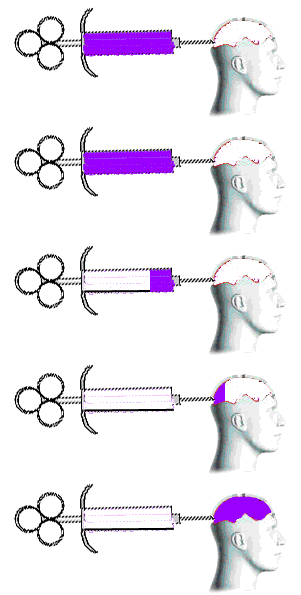
The gif above explains how passive audiences take in information. Additionally, I also found this short film which is about passive audience's in society. The characters in the film are controlled their 'leader' through media such as TV. They think they know the real world but in reality they are controlled by the media.
Institution
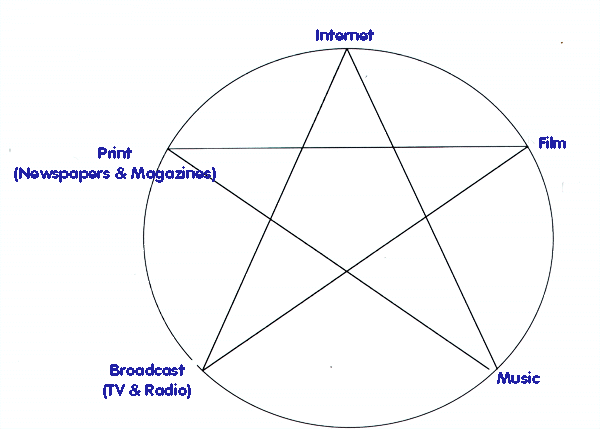
An institution is an organization or brand, for example, Chalfonts Community College is an institution. In the media, institutions are responsible for producing media texts such as: film, newspapers, magazines, music, tv, radio and the internet. Institutions include its producers, their set of codes and values, and their relationship to an audience.


